
 Under the expert guidance of our Board Certified Vascular Surgeon, Dr. Mark Zuzga, our team of Vein Specialists & Vascular Experts are committed to delivering top-tier outpatient vascular & vein evaluation and treatment throughout the greater Tampa & West Florida surrounding areas. Should you find yourself dealing with leg pain, swelling, ulcers, discoloration, or the appearance of spider and varicose veins, we invite you to request a screening today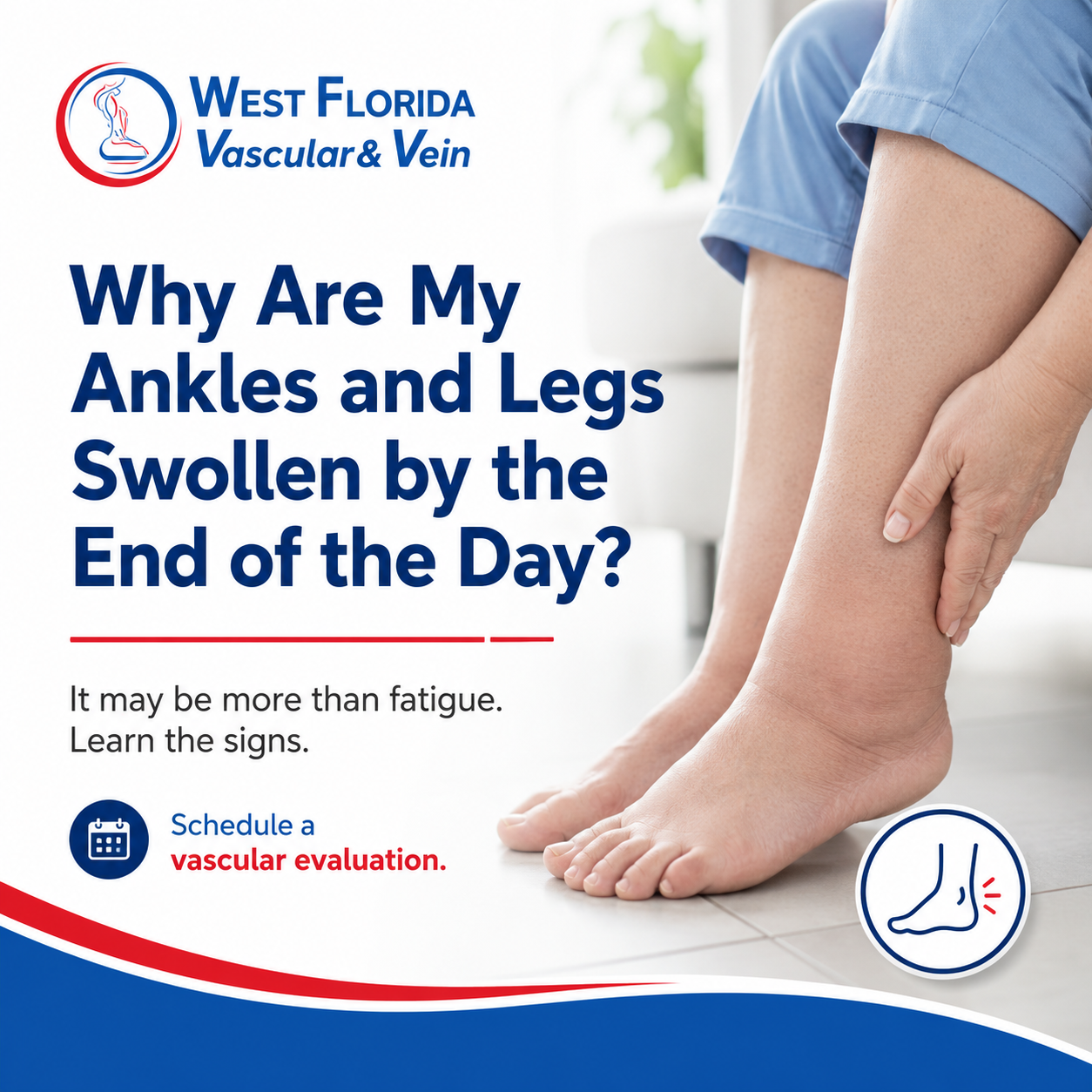
Why Are My Ankles and Legs Swollen by the End of the Day?
Do your shoes feel tighter in the evening? Are there sock marks around your ankles, or do your lower legs look puffy after sitting or standing all day? Occasional mild swelling can happen, but recurring swelling may be a sign that your veins are struggling to move blood efficiently back toward your heart.
What Causes Ankles and Legs to Swell?
Swelling caused by fluid buildup in the tissues is called edema. It may occur after prolonged sitting, standing, travel, inactivity, eating salty foods, or spending time in Florida’s heat.
However, swelling that regularly becomes worse throughout the day may be associated with chronic venous insufficiency. This condition develops when the valves inside the leg veins become weakened or damaged. Instead of keeping blood moving upward, the valves allow blood to pool in the lower legs, increasing pressure inside the veins.
Common symptoms may include:
- Swollen ankles, feet, or lower legs
- Aching, throbbing, or heavy legs
- Visible varicose veins
- Itching or burning sensations
- Skin discoloration near the ankles
- Symptoms that improve after elevating the legs
Is Evening Leg Swelling a Sign of Venous Insufficiency?
It can be. Swelling related to venous insufficiency commonly becomes more noticeable after long periods of standing or sitting and may improve overnight or when the legs are elevated. However, leg swelling can also be related to medications, injury, lymphedema, kidney disease, heart conditions, or other medical concerns. A proper evaluation is important because the correct treatment depends on the underlying cause.
When Should I Be Concerned About Leg Swelling?
Seek immediate medical attention for sudden swelling, especially when it affects only one leg or is accompanied by pain, redness, warmth, chest pain, dizziness, or shortness of breath. These symptoms may indicate a blood clot or another urgent condition.
Recurring or gradually worsening swelling should also be evaluated, particularly when accompanied by varicose veins, skin changes, sores, or persistent discomfort.
How Is Leg Swelling Evaluated and Treated?
A vascular specialist may examine your legs and use noninvasive vascular ultrasound to evaluate blood flow and vein function. Treatment may include movement, leg elevation, properly fitted compression garments, lifestyle changes, or minimally invasive vein procedures including the Venafit Procedure, Endovenous Ablation, Sclerotherapy, and Microphlebectomy.
West Florida Vascular & Vein provides comprehensive evaluation and treatment for vein and artery conditions throughout the Tampa Bay and West Florida area. If swollen ankles or legs are becoming an everyday problem, call 727-712-3233 to schedule a vascular consultation with our team.