

 Under the expert guidance of our Board Certified Vascular Surgeon, Dr. Mark Zuzga, our team of Vein Specialists & Vascular Experts are committed to delivering top-tier outpatient vascular & vein evaluation and treatment throughout the greater Tampa & West Florida surrounding areas. Should you find yourself dealing with leg pain, swelling, ulcers, discoloration, or the appearance of spider and varicose veins, we invite you to request a screening today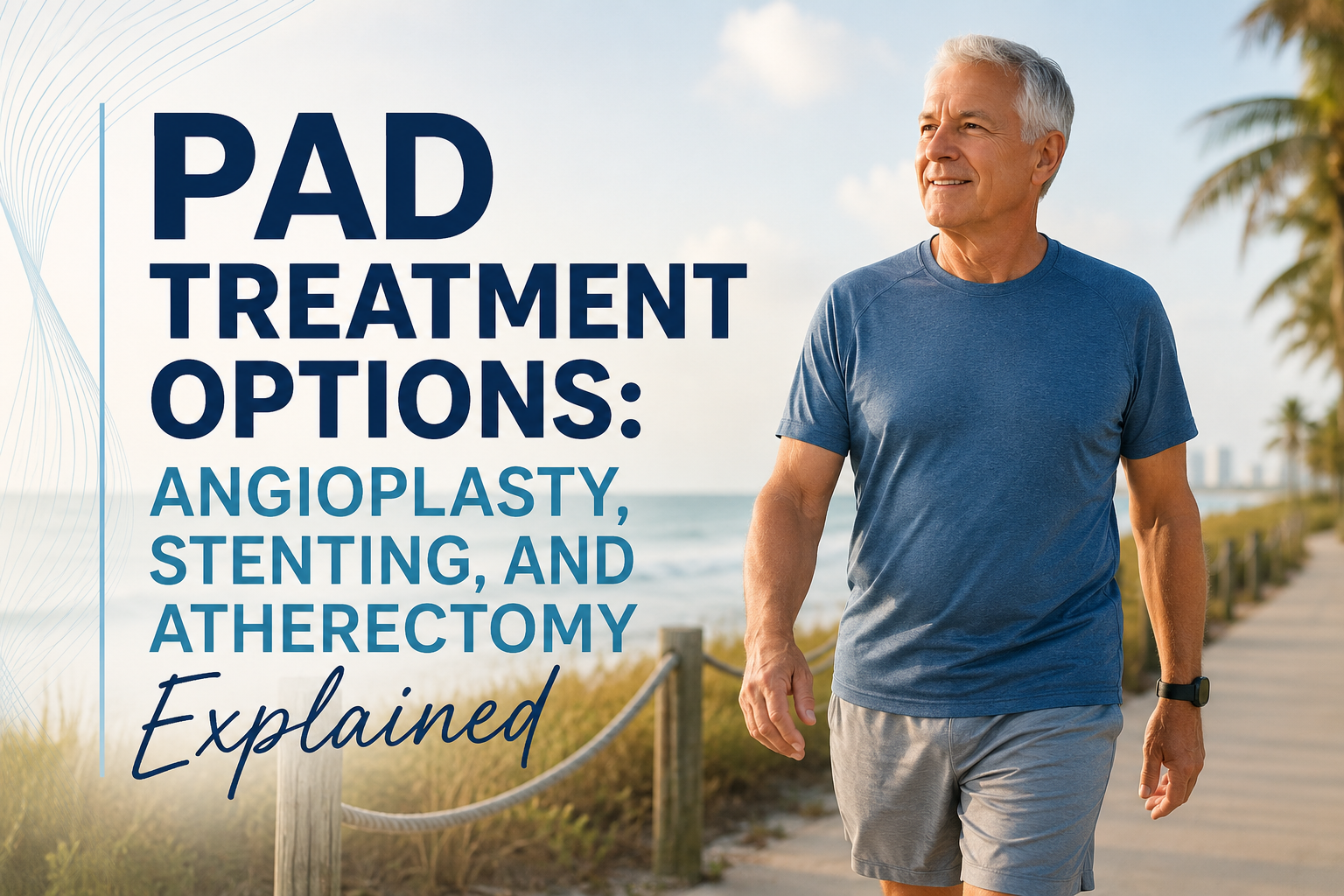
PAD Treatment Options: Angioplasty, Stenting, and Atherectomy Explained
Peripheral Artery Disease (PAD) affects millions of Americans and occurs when plaque builds up inside the arteries, reducing blood flow to the legs and feet. Left untreated, PAD can lead to worsening leg pain, non-healing wounds, mobility issues, and in severe cases, limb loss. Fortunately, advances in vascular medicine have made it possible to restore blood flow using minimally invasive procedures that often require little downtime.
If you’ve been diagnosed with PAD, you may hear your vascular specialist discuss treatment options such as angioplasty, stenting, or atherectomy. Understanding the differences between these procedures can help you feel more confident about your treatment plan.
When Is PAD Treatment Needed?
Not every patient with PAD requires a procedure. Many people can initially manage symptoms through lifestyle changes, exercise programs, smoking cessation, and medications. However, when blood flow becomes severely restricted, symptoms worsen, or wounds fail to heal, intervention may be necessary to restore circulation.
Common signs that may indicate advanced PAD include:
- Leg pain while walking (claudication)
- Cramping or fatigue in the legs
- Foot or toe wounds that heal slowly
- Cold feet or toes
- Discoloration of the legs or feet
- Pain at rest
What Is Angioplasty?
Angioplasty is one of the most common minimally invasive treatments for PAD. During the procedure, a vascular specialist inserts a small catheter into the affected artery. A tiny balloon at the tip of the catheter is then inflated at the site of the blockage, compressing plaque against the artery wall and widening the artery to improve blood flow.
Benefits of Angioplasty
- Minimally invasive
- No large surgical incisions
- Improved circulation to the legs and feet
- Reduced leg pain and cramping
- Quick recovery for most patients
Many patients return to normal activities within a short period following treatment.
What Is a Stent?
Sometimes, after angioplasty, the artery may need additional support to remain open. In these cases, a stent may be placed.
A stent is a small mesh tube that expands inside the artery and acts as a scaffold to help keep the vessel open. Stents are frequently used when arteries are heavily narrowed or when there is concern that the artery could collapse or narrow again after angioplasty.
Benefits of Stenting
- Helps maintain long-term blood flow
- Supports weakened artery walls
- Reduces the likelihood of vessel recoil
- Often performed during the same procedure as angioplasty
For many patients, angioplasty and stenting work together to achieve optimal results.
What Is Atherectomy?
Unlike angioplasty, which compresses plaque against the artery wall, atherectomy actually removes plaque from the artery.
During an atherectomy procedure, a specialized catheter equipped with a cutting, shaving, rotational, or laser device is guided to the blockage. The device removes or modifies the plaque buildup, helping restore blood flow through the artery. Atherectomy can be especially useful for heavily calcified or hardened blockages that may not respond as well to balloon angioplasty alone.
Benefits of Atherectomy
- Removes plaque rather than simply compressing it
- Can improve blood flow in heavily calcified arteries
- May reduce the need for extensive stenting in certain patients
- Minimally invasive with relatively short recovery times
In many cases, atherectomy is combined with angioplasty to achieve the best possible outcome.
Which PAD Treatment Is Right for You?
There is no one-size-fits-all approach to PAD treatment. The best option depends on several factors, including:
- Location of the blockage
- Severity of arterial narrowing
- Amount of calcification present
- Overall health
- Symptoms and lifestyle limitations
Your vascular specialist will use advanced imaging and diagnostic testing to determine the most effective treatment strategy for your specific condition.
Don’t Ignore the Warning Signs of PAD
PAD is more than just leg pain—it can be a warning sign of widespread vascular disease and an increased risk of heart attack and stroke. Early diagnosis and treatment can help preserve mobility, reduce symptoms, and improve overall quality of life.
If you’re experiencing leg pain while walking, non-healing wounds, or other symptoms of poor circulation, the team at West Florida Vascular & Vein can help. Dr. Mark Zuzga and our experienced vascular specialists provide advanced diagnostic testing and minimally invasive PAD treatment options for patients throughout Tampa, Safety Harbor, and the surrounding communities.
Schedule Your PAD Evaluation Today
Don’t wait for symptoms to worsen. Contact West Florida Vascular & Vein today to learn more about your treatment options and take the first step toward healthier circulation.
Visit www.westfloridavascularandvein.com to learn more or call 727-712-3233 to schedule your consultation!