

 Under the expert guidance of our Board Certified Vascular Surgeon, Dr. Mark Zuzga, our team of Vein Specialists & Vascular Experts are committed to delivering top-tier outpatient vascular & vein evaluation and treatment throughout the greater Tampa & West Florida surrounding areas. Should you find yourself dealing with leg pain, swelling, ulcers, discoloration, or the appearance of spider and varicose veins, we invite you to request a screening today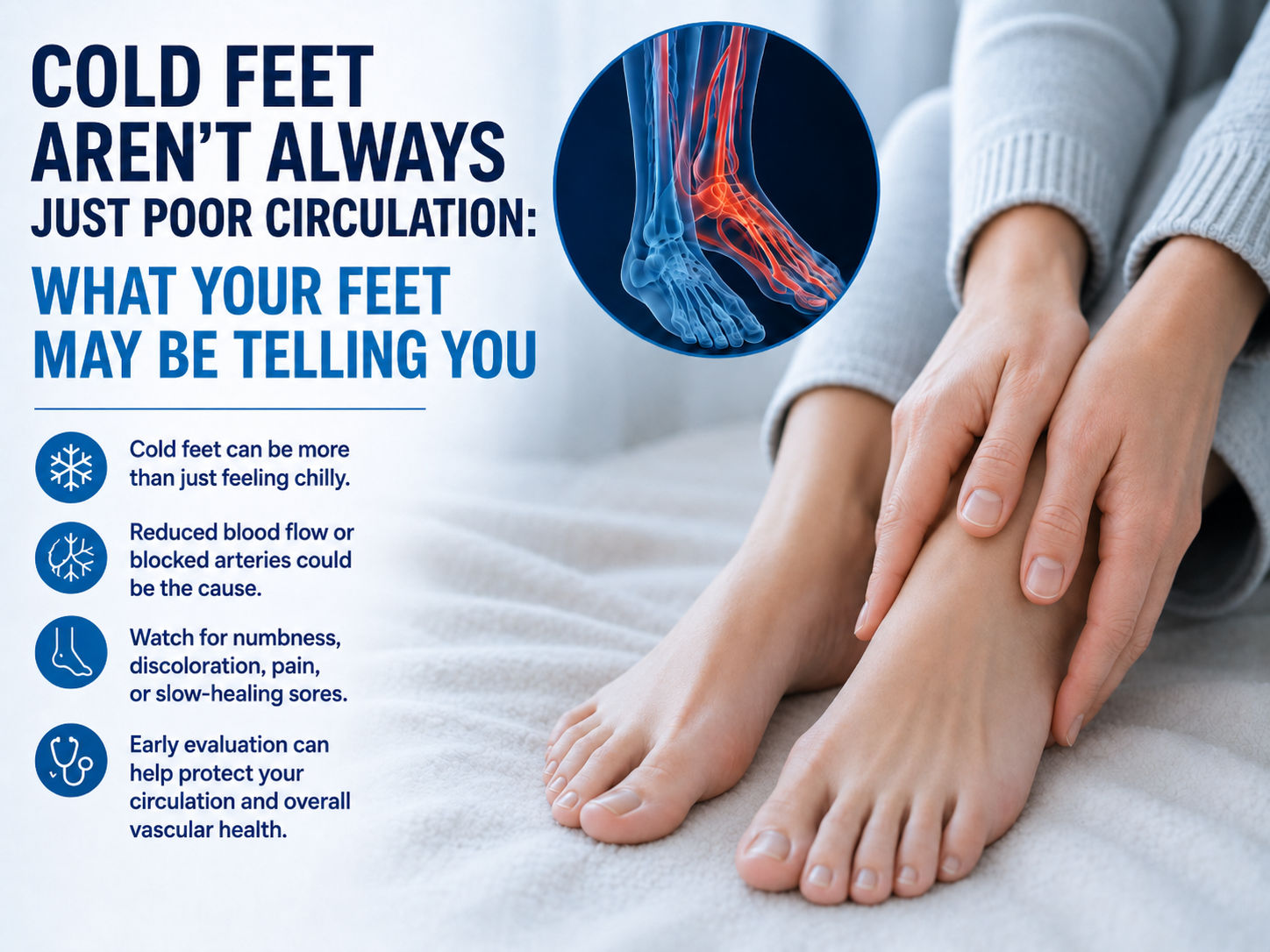
Cold Feet Aren’t Always Just Poor Circulation: What Your Feet May Be Telling You
Some people have cold feet all the time. You crawl into bed and your feet feel like ice cubes. You put on socks, grab a blanket, blame the air conditioning, or simply decide that you have “bad circulation.” And sometimes, that really is all it is.
But if your feet are frequently cold, particularly if one foot feels colder than the other, it may be worth paying closer attention. Your feet are quite literally at the end of the line when it comes to circulation. When blood flow to the legs and feet is reduced, they can sometimes be among the first places where symptoms begin to show up.
Why Are My Feet Always Cold?
Cold feet can have many possible causes. Temperature, medications, thyroid conditions, nerve problems, diabetes and other health issues may all play a role. However, persistent coldness in the feet or toes can also be associated with reduced arterial blood flow.
One condition a vascular specialist may evaluate for is Peripheral Artery Disease, commonly called PAD. PAD develops when arteries become narrowed or blocked, reducing the amount of oxygen-rich blood reaching the legs and feet. West Florida Vascular & Vein treats PAD and other arterial conditions using both medical management and minimally invasive vascular procedures when appropriate.
Cold feet alone do not automatically mean you have PAD. It is the overall pattern of symptoms that matters.
What Other Changes Should I Watch For?
Pay attention if cold feet are accompanied by other changes such as numbness or tingling, weakness in the legs, aching or cramping while walking, skin discoloration, slower hair growth on the legs, weak pulses in the feet, or sores on the toes or heels that seem unusually slow to heal. A particularly important clue is a difference between the two sides. If one foot regularly feels significantly colder than the other, changes color, becomes painful or develops a wound that is not healing normally, that deserves medical attention.
West Florida Vascular & Vein notes that PAD symptoms can include coldness, numbness and changes involving the skin and feet, although some people with PAD have few obvious symptoms at all.
When Should Cold Feet Be Checked?
You do not need to panic every time your toes get chilly. But you also should not automatically dismiss a symptom simply because you have lived with it for years. If your feet are consistently cold despite being in a warm environment, the problem is worsening, one side is noticeably different from the other, or you are also experiencing leg pain, numbness, discoloration or wounds that will not heal, a vascular evaluation can help determine whether circulation is contributing to the problem.
Testing may include noninvasive studies that assess blood flow through the legs and feet. Finding a vascular problem earlier may also allow treatment to begin before symptoms become more serious. A suddenly cold, pale, blue, painful or weak foot is different from simply having chronically chilly toes and may require emergency medical attention.
Your Feet May Be Giving You Information
We tend to ignore our feet until they hurt. But temperature, sensation, skin color, wounds and even how your legs feel when you walk can provide important clues about what is happening with your circulation.
If your cold feet keep making you wonder whether something more is going on, stop guessing.
West Florida Vascular & Vein provides comprehensive vascular evaluation and treatment throughout the greater Tampa and West Florida area. Call 727-712-3233 to schedule a consultation or vascular screening and find out what your feet may be trying to tell you.